As part of their “Curious Iowa” series, the Cedar Rapids Gazette ran a story on December 1st about agricultural drainage tile in Iowa farm fields. I’ve written about tile many times and there are several essays in my book (The Swine Republic) that focus on the topic.
Simply put, drainage tile is porous pipe that lowers the water table to optimize crop production while also discharging water to the stream network. Prior to European settlement, the water table was near the land’s surface across much of Iowa and the agricultural Midwest. A water table above the land’s surface is manifested as a wetland. These wetlands were most common in the Des Moines Lobe landform where the recently departed (10,000 years ago) Wisconsin glacier left indentations in the landscape that regularly filled and dried in sync with weather patterns. Wetlands that hold water nearly all the time are perennial wetlands; those that regularly go dry are ephemeral wetlands. These wetlands have often been called potholes or kettles.
The Des Moines Lobe landform is the southern-most extent of the Prairie Pothole ecosystem. The region’s biological productivity was perhaps unmatched in North America and its habitat was/is critical for several dozen species of migratory waterfowl and other bird species adapted to marshy habitat. These species have declined in most areas of Iowa, as have predator birds like the once-named Marsh Hawk (now called the Northern Harrier).
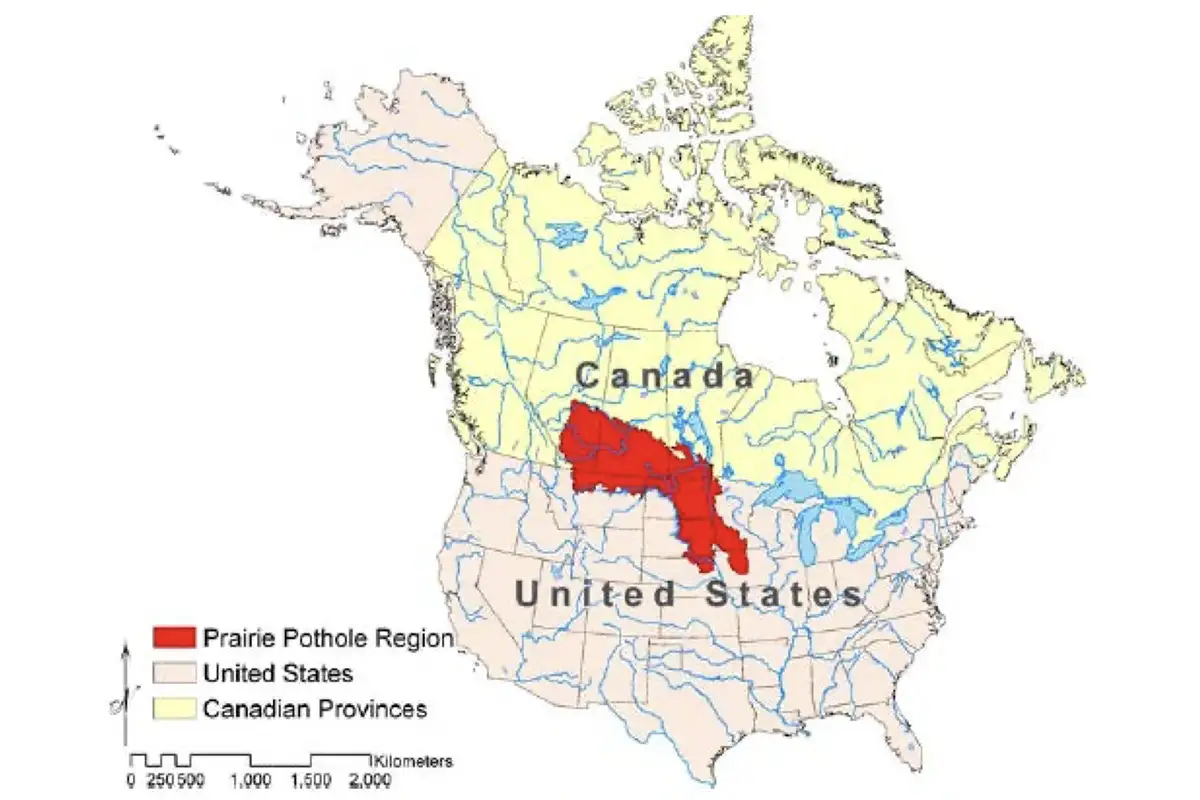
If you live in this area, you probably won’t be surprised to read this: some research has shown that it has the most extreme climate on earth (1).
Early tiling (pre-1910) was literally an effort to ‘make land’ that could be farmed. Since the wetlands are now long gone, the reasons for continued tiling in the present day have evolved into something akin to Pete Hegseth rationalizing why he needs another Red Bull.
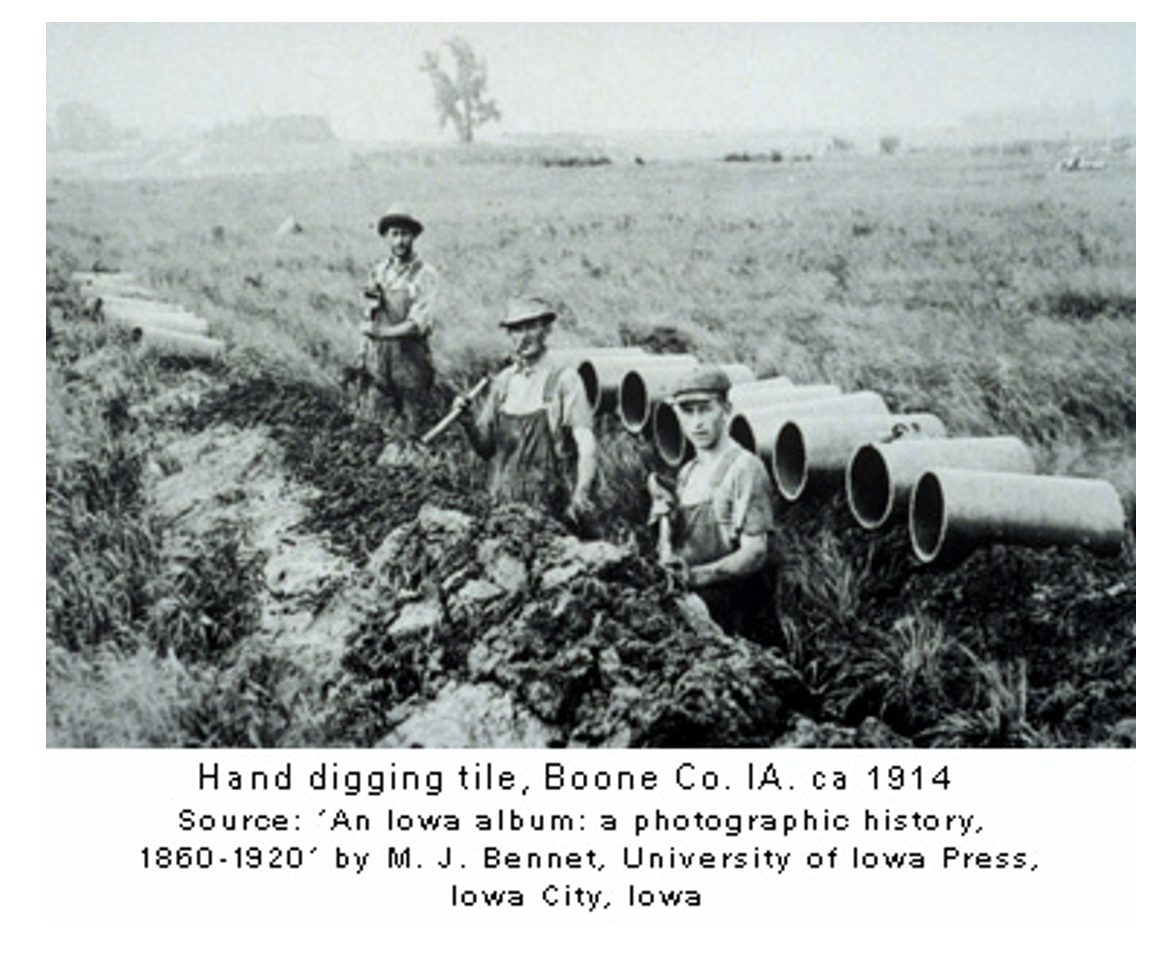
The proximate reason for tiling a field now is money, plain and simple. The conventional wisdom in agriculture is that a newly-tiled field will cough up more bushels of corn, and that tile is an investment that will pay off. Let’s look at that.
It costs about $1000 per acre to put a network of drainage tile into a field. This is called pattern tiling. If you get 10 extra bushels (reasonable) at the current corn price of $4.30 per bushel and all your other input costs remain the same (questionable), it would take around 20 years to make that investment good. (Consider: average age of Iowa farmer is 60). Bear in mind that you just don’t go tile a 1-acre wet spot, you tile the entire field which in Iowa is usually around 40 acres (some are much larger). The tile isn’t going to have a uniform benefit across a field; some or most of the area may not benefit at all in terms of increased yield. So to you the reader and the non-farming casual observer, it may not make much sense to pattern tile a field.
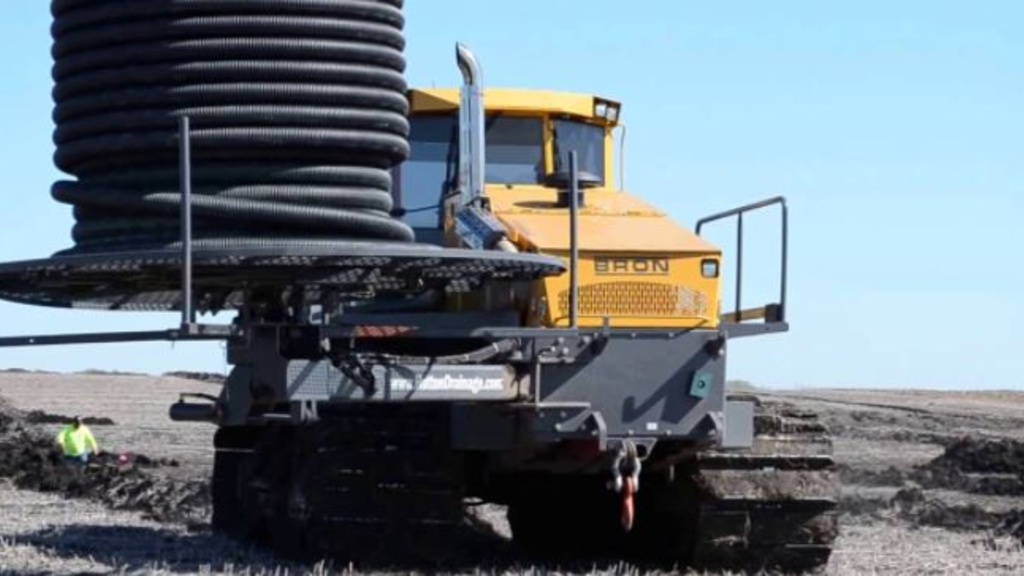
But…..all things being equal, a tiled field has more value in Iowa than one that isn’t tiled. Interestingly, that increase in value is about $1000 per acre on average (about the same cost to have it tiled), although it can be much more. And….the annual depreciation of the tile investment is tax deductible. If you own and farm the land, much of the investment may be deducted in the year of installation (2). You increase the value of your capital and then get to deduct the investment. Sweet deal. So if a farmer has a zesty banker or cash on hand, the yield bump and payoff period may not be all that important.
Exit economists, enter hydrologists.
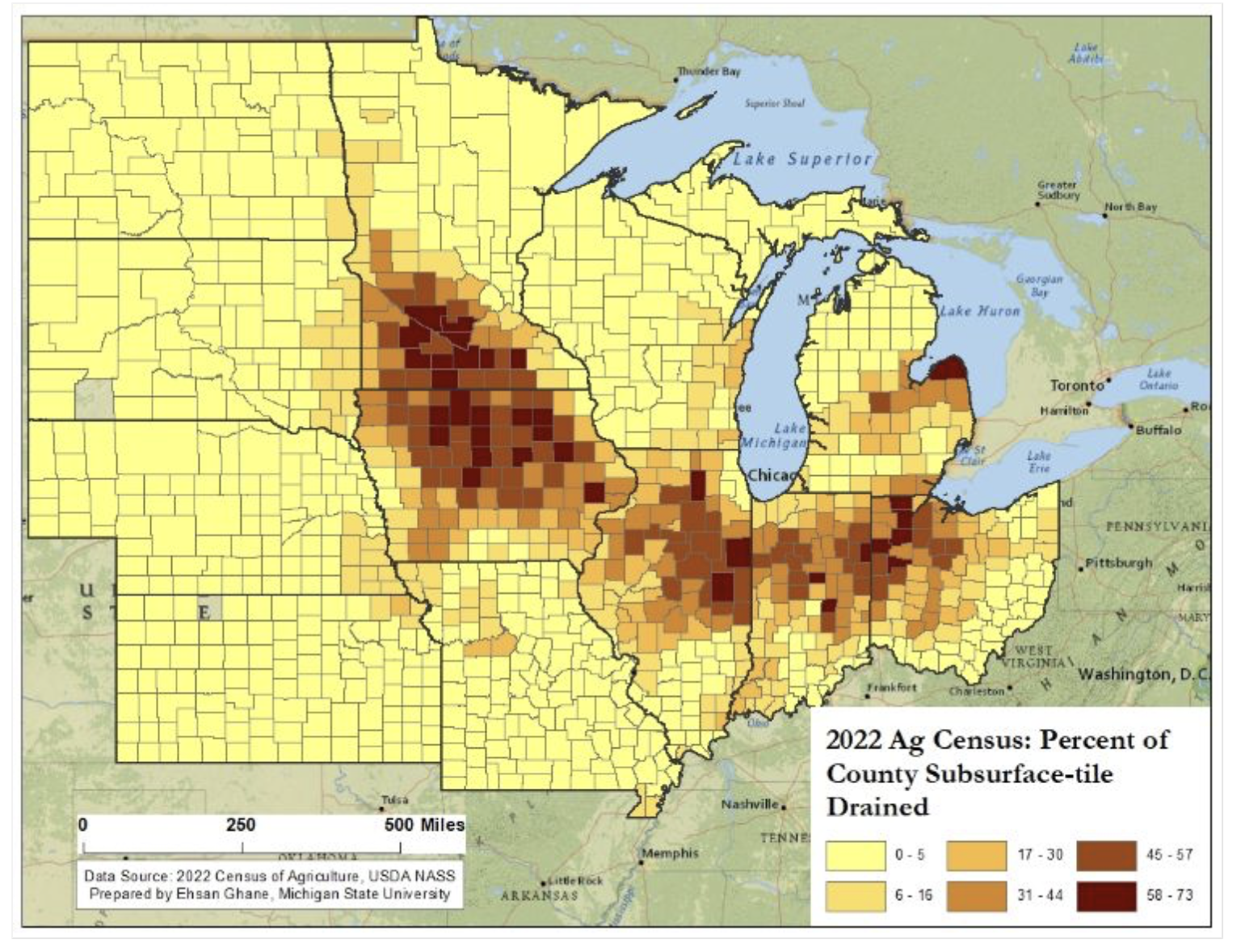
We’ve known for 50 years that drainage tile and elevated stream nitrate get along like a house on fire. Densely tiled watersheds tend to have high nitrate concentrations, and Gulf of Mexico hypoxia has long been sourced to the tiled portion of the corn belt (map below). Drying the soil with tile allows atmospheric oxygen into spaces where it oxidizes nitrogen-containing organic compounds into water-soluble nitrate, which can then be flushed into the tile and ultimately streams. Because the human health consequences of nitrate in drinking water are getting more attention by the day, and because one of these consequences is cancer, and because Iowa has the second highest cancer rate, ag industry apologists are forced to get creative when it comes to new tile.
A long time rationalization for tile is that it reduces soil erosion and that is an argument made in the Gazette article. That line of thinking goes like this: Tile dries out the soil between rain events, increasing the water absorption capacity of the soil and thus the amount of surface runoff in rainstorms is decreased. Since surface runoff is known to contain more soil particles than tile discharge, it’s intuitive to think that by engineering water flow downward toward field tiles, less soil will wash away. I don’t argue with this logic.
However….there’s really not much scientific evidence (none that I can find anyway) that shows wholesale tiling of the corn belt has reduced soil erosion. A well-drained field with good soil structure and adequate cover will certainly retain soil better than those that don’t fit that description. A tiled field with poor soil structure and surface inlets that allow ponded water to flow directly to tiles is likely no better than a field with no tile, and worse than one with healthy soil and crop residue on the surface.
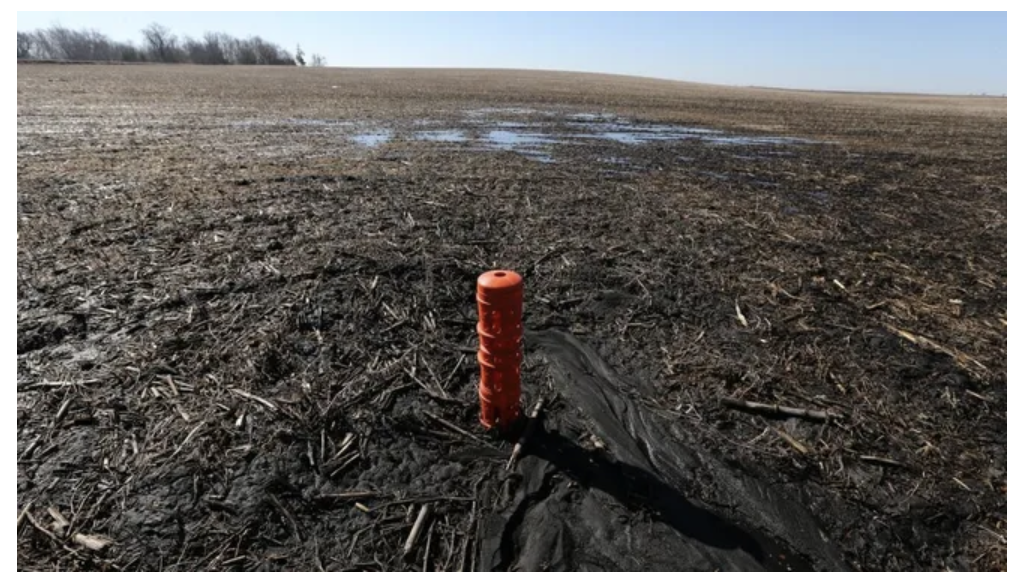
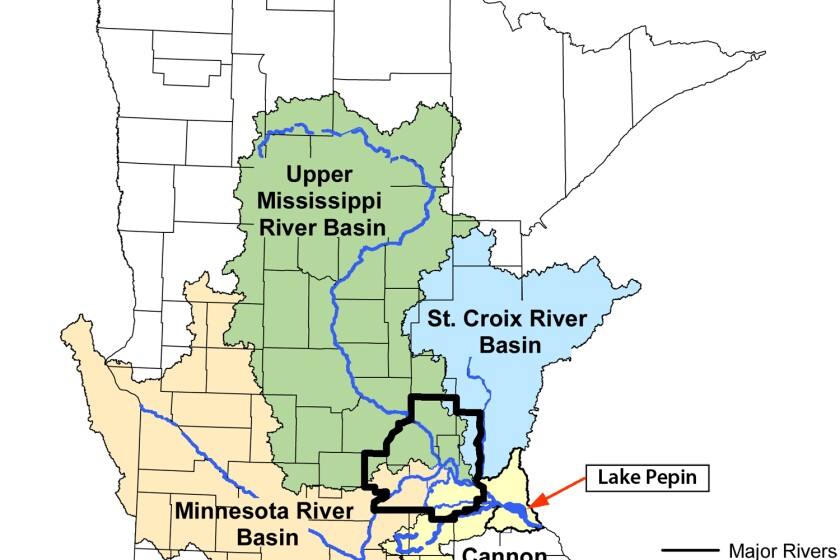
We can know for certain that drainage tile transfers the erosive power of water to the edge of the field, and, downstream. This is a terrible problem in some watersheds and the poster child for this is the Minnesota River valley, where such erosion has fouled the Mississippi River’s Lake Pepin. Tile water, especially that shunted through surface intakes such as those seen in terraced land, can make water in the receiving streams more erosive, causing some of the extensive stream bank erosion that we see throughout Iowa. This is an important source of phosphorus the Gulf of Mexico.
People in agriculture are aware that continued tiling is incongruent with lowering stream nitrate levels. In their world, the answer is to continue to grant farmers license to lay pipe like crazy men, and then ask the taxpayer to mitigate the polluted discharge, all the while the farmer cleans up financially. The state of Iowa and the federal government have blown millions of your tax dollars in such schemes, and are poised to blow millions more. Iowa Congressman Zach Nunn just sponsored an amendment that would expedite such projects in the recently passed PERMIT act weakening the Clean Water Act.
Iowa cannot solve its nitrate problem unless we wrap our heads around the issue of new drainage tile. We’re installing thousands of miles (yes thousands) of new tile every year. We gift the financial benefits to farmers and earth movers and stick you with a tumor, and/or a $1000 bill for a reverse osmosis system on your kitchen tap.
You must have the capacity to turn a blind eye to some really bad stuff to be ok with this.
If you’re up for a long read on the effect of tile drainage on Iowa, this is the absolute best source is right here: https://pubs.lib.uiowa.edu/iowareview/article/15738/galley/124137/download/
Citations
-
Millett, B., Johnson, W.C. and Guntenspergen, G., 2009. Climate trends of the North American prairie pothole region 1906–2000. Climatic Change, 93(1), pp.243-267.
-
https://www.extension.iastate.edu/agdm/wholefarm/html/c2-90.html