I’m certain that the people that have profited most from the spiraling ball have seen the polluted water, dead fish, and human health consequences. But their greed is such that rather than change the polluting paradigm, they find it more convenient to look the other way. Or they find it more cost effective to pay for sickening propaganda like this:
The violence, in plain sight for years now, endures because it has been sanctioned by our society’s elite. The near entirety of Republican Party office holders and apparatchiks see the violence as necessary to maintain the status quo, and hardly even see it as a bad thing. Kicking environmentalist ass feels good to them. They enjoy it, brag about it, and congratulate each other for doing it.
The Democrats want us to take comfort in the idea that at least in aggregate, they aren’t sadists on this issue like the Rs. But their fetish for farmer votes and lust for agribusiness cash have compelled them to turn a blind eye to far too much of the violence. They’ve looked the other way, not only allowing the carnage to continue, but, in doing so, effectively endorsing it.
Elites in academia have eagerly sold the ivory tower to the perpetrators of the violence, all the while knowing better than anybody the consequences of it. Some are eager to signal loyalty by providing the intellectual foundation for it. This leaves it to the foot soldiers at the universities, agencies and NGOs to speak up; few (or none) see an upside to doing that.
Reading is my inspiration and often I pick up a book, any book, hoping to find something relevant to my frequent topics. This creates some odd couplings: Bob Dylan and Joni Ernst, Abe Lincoln and walleye fishing, Richard Feynman and manure digesters, and Galileo and Chuck Grassley, to name a few.
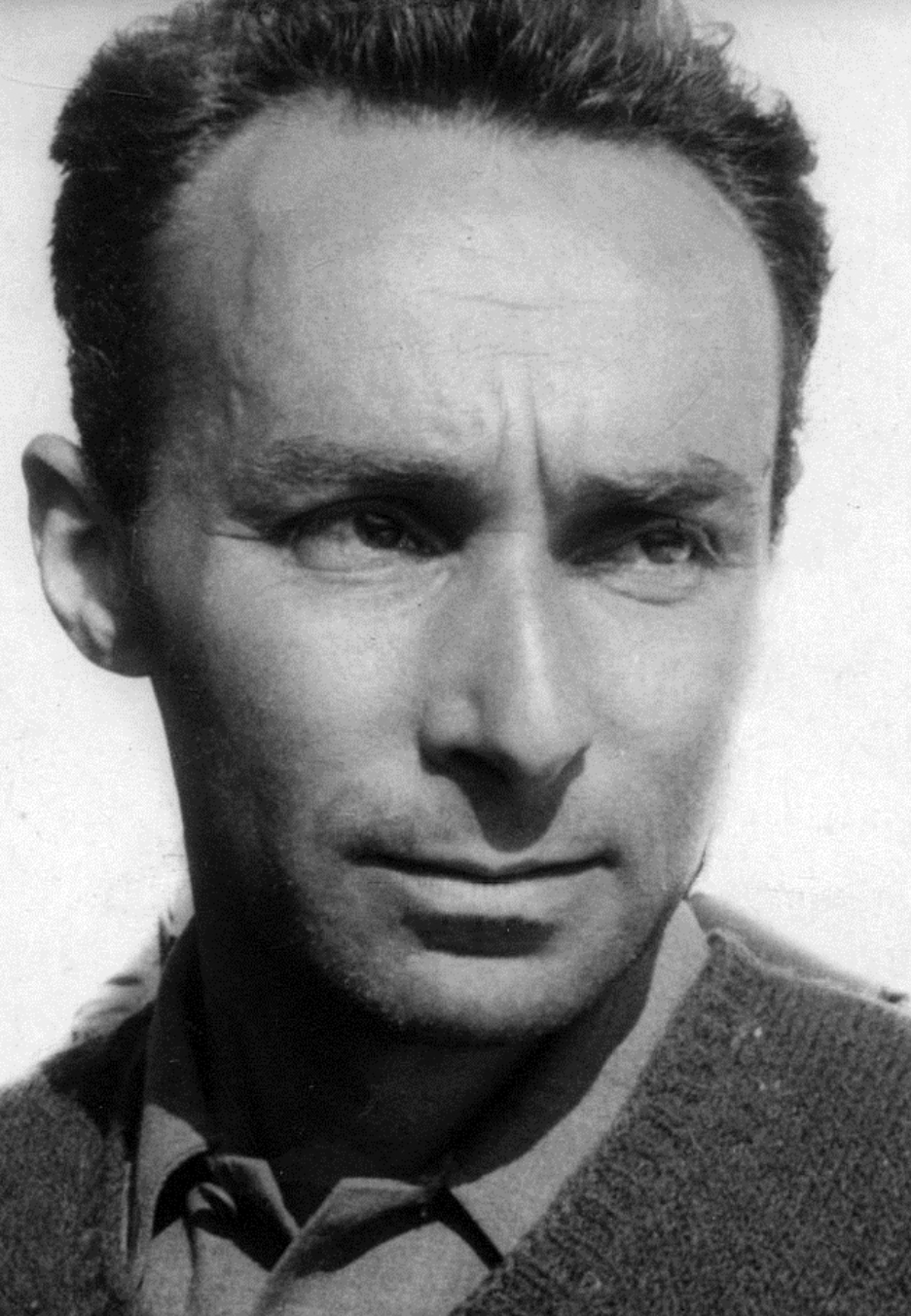
For a long time I’ve wanted to apply this formula to the work of Primo Levi. Never was a writer named more fortuitously than Primo. An Italian of Jewish descent who famously survived a year in Auschwitz, this chemist was one of the 20th century’s greatest writers. My take on the guy is he had two styles and two perspectives, usually separate and distinct depending on the book: 1) scientist and 2) witness to unspeakable horror.
Reading the ‘witness’ work is like wandering a dense, dark forest at midnight. The thought of what lurks behind the next tree is terrifying, but marginally less terrifying than what might be creeping up behind you. The reader is compelled to wander on.
(Be certain as you continue here that I am not drawing a moral equivalence between the Holocaust and the condition of Iowa’s environment.)
In his last book before dying, The Drowned and the Saved (1986), Levi seems to merge his two perspectives, analyzing the horror in a careful and meticulous way characteristic of his scientific training. He evaluates the behavior of German citizens, Auschwitz guards and the Jewish prisoners that collaborated with the camp guards and administrators. He notes that ordinary Germans found comfort by looking away, convincing themselves the worst wasn’t happening as long as they didn’t look at it. Levi also observes that after the war, all who were responsible for orchestrating and implementing the Final Solution, from the erudite Albert Speer, to the fanatical Adolf Eichmann, on down to the lowest brute guarding the camp kitchen, said they did what they did because they were ordered to do it, my superiors committed worse acts than mine, and in the environment in which I existed, I could not have acted differently.
Particularly interesting was Levi’s analysis of the philosopher Friederich Nietzsche. It’s well known that many in the Third Reich, including Hitler, admired Nietzsche. Not surprisingly, Levi found his message repugnant. But he did not find in Nietzsche an evil joy derived from the infliction of suffering, unlike so many responsible for the Holocaust. On that, he characterizes Nietzsche’s perspective as such: “The pain of the hoi polloi (the people) is the price that must be paid for the advent of the reign of the elect; it is a minor evil, but an evil nonetheless.”
It cannot be disputed that we’ve bestowed privilege upon Iowa agriculture—in our culture, in our economy, in our politics and in the control and oversight of our natural resources. They act like ‘the elect’ for a reason—because they are. I urge you to challenge and confront that privilege head on. It’s past time that we stop submitting to the abuse. The reason for our degraded environmental condition is because there has been a conscious, deliberate, organized, and yes, sinister effort to deny Iowans a better quality of life, better air and better water, better and more parks, and the right to enjoy nature.
Don’t let them look away.Citations
1. Jochen P. Zubrod, Mirco Bundschuh, Gertie Arts, Carsten A. Brühl, Gwenaël Imfeld, Anja Knäbel, Sylvain Payraudeau, Jes J. Rasmussen, Jason Rohr, Andreas Scharmüller, Kelly Smalling, Sebastian Stehle, Ralf Schulz, and Ralf B. Schäfer Environmental Science & Technology201953 (7), 3347-3365
2. Pompeani DP, Hillman AL, Finkenbinder MS, et al. The environmental impact of a pre-Columbian city based on geochemical insights from lake sediment cores recovered near Cahokia. Quaternary Research. 2019;91(2):714-728. doi:10.1017/qua.2018.141
Be assured that it is within our capacity to prevent events like this from happening. But our state’s leaders think attracting polluters like this to our state is good for bidness, and so we don’t make them adequately armor their operations against environmental catastrophe. And the penalties for such an event when it does happen are deliberately kept light and as such deterrence is non-existent.
Intrinsic to human agriculture is a disturbance of the environment. Evidence of this disturbance has been found for even the ancient agriculture of the indigenous people of North America (2). Only over the past two centuries, however, has agriculture, and especially western agriculture, resorted to violently subjugating nature by steamrolling through its biological, chemical, and physical processes. We might consider John Deere’s invention of the steel plow in the 1830s as the beginning of this era.
In the post World War II period, the victims of the violence, at least in countries like the U.S. and Canada, have included not only nature but also the very people industrialized agriculture purports to feed. Fossil fuels have been the accomplice in their crime, greed the motive. The crime spree accelerated in the 1970s as the industry began decoupling livestock from the farmers growing their food. This was most efficiently and profitably done (at least for those in agribusiness) by eliminating forage crops in favor of more corn and especially soybeans. Concentrating livestock animals on only a subset of farms often changed the nature of manure from mostly solid to mostly liquid and made it “hot”, i.e. increasing its capacity to do environmental damage. A CAFO puts millions of pounds and gallons of environmentally hazardous material into the hands of one person to manage. Can it be a surprise that one farmer now has the capacity to kill a good-sized river?
It doesn’t have to be this way. We have the capacity to farm, produce food prosperously, and process farmers’ inputs and outputs without inflicting violence upon both nature and people. We literally know how to do it; some in agriculture are doing it. The rest consciously choose not to. Why? Because the ethic driving Iowa agriculture is one of exploitation. Farm it all. Squeeze out every last bushel. Environmental degradation and other collateral damage like cancer, asthma, birth defects—that’s for sissies. They tell us it’s a small price we all have to pay for the prosperity they bestow upon us.
I see the descent into violence much like a ball bearing that spiraled down a funnel; each revolution (mechanization, consolidation, drainage, pesticides, chemical fertilizers, GMO, CAFOs etc.) was drawn ever downward by some tiny gravitational logic until the ball finally reached the bottom of the funnel and people in places like Iowa found themselves in awash in filth and engulfed in stench while wondering if our water is safe for drinking and swimming and if our air is safe for breathing.
I’m certain that the people that have profited most from the spiraling ball have seen the polluted water, dead fish, and human health consequences. But their greed is such that rather than change the polluting paradigm, they find it more convenient to look the other way. Or they find it more cost effective to pay for sickening propaganda like this:
The violence, in plain sight for years now, endures because it has been sanctioned by our society’s elite. The near entirety of Republican Party office holders and apparatchiks see the violence as necessary to maintain the status quo, and hardly even see it as a bad thing. Kicking environmentalist ass feels good to them. They enjoy it, brag about it, and congratulate each other for doing it.
The Democrats want us to take comfort in the idea that at least in aggregate, they aren’t sadists on this issue like the Rs. But their fetish for farmer votes and lust for agribusiness cash have compelled them to turn a blind eye to far too much of the violence. They’ve looked the other way, not only allowing the carnage to continue, but, in doing so, effectively endorsing it.
Elites in academia have eagerly sold the ivory tower to the perpetrators of the violence, all the while knowing better than anybody the consequences of it. Some are eager to signal loyalty by providing the intellectual foundation for it. This leaves it to the foot soldiers at the universities, agencies and NGOs to speak up; few (or none) see an upside to doing that.
Reading is my inspiration and often I pick up a book, any book, hoping to find something relevant to my frequent topics. This creates some odd couplings: Bob Dylan and Joni Ernst, Abe Lincoln and walleye fishing, Richard Feynman and manure digesters, and Galileo and Chuck Grassley, to name a few.
For a long time I’ve wanted to apply this formula to the work of Primo Levi. Never was a writer named more fortuitously than Primo. An Italian of Jewish descent who famously survived a year in Auschwitz, this chemist was one of the 20th century’s greatest writers. My take on the guy is he had two styles and two perspectives, usually separate and distinct depending on the book: 1) scientist and 2) witness to unspeakable horror.
Reading the ‘witness’ work is like wandering a dense, dark forest at midnight. The thought of what lurks behind the next tree is terrifying, but marginally less terrifying than what might be creeping up behind you. The reader is compelled to wander on.
(Be certain as you continue here that I am not drawing a moral equivalence between the Holocaust and the condition of Iowa’s environment.)
In his last book before dying, The Drowned and the Saved (1986), Levi seems to merge his two perspectives, analyzing the horror in a careful and meticulous way characteristic of his scientific training. He evaluates the behavior of German citizens, Auschwitz guards and the Jewish prisoners that collaborated with the camp guards and administrators. He notes that ordinary Germans found comfort by looking away, convincing themselves the worst wasn’t happening as long as they didn’t look at it. Levi also observes that after the war, all who were responsible for orchestrating and implementing the Final Solution, from the erudite Albert Speer, to the fanatical Adolf Eichmann, on down to the lowest brute guarding the camp kitchen, said they did what they did because they were ordered to do it, my superiors committed worse acts than mine, and in the environment in which I existed, I could not have acted differently.
Particularly interesting was Levi’s analysis of the philosopher Friederich Nietzsche. It’s well known that many in the Third Reich, including Hitler, admired Nietzsche. Not surprisingly, Levi found his message repugnant. But he did not find in Nietzsche an evil joy derived from the infliction of suffering, unlike so many responsible for the Holocaust. On that, he characterizes Nietzsche’s perspective as such: “The pain of the hoi polloi (the people) is the price that must be paid for the advent of the reign of the elect; it is a minor evil, but an evil nonetheless.”
It cannot be disputed that we’ve bestowed privilege upon Iowa agriculture—in our culture, in our economy, in our politics and in the control and oversight of our natural resources. They act like ‘the elect’ for a reason—because they are. I urge you to challenge and confront that privilege head on. It’s past time that we stop submitting to the abuse. The reason for our degraded environmental condition is because there has been a conscious, deliberate, organized, and yes, sinister effort to deny Iowans a better quality of life, better air and better water, better and more parks, and the right to enjoy nature.
Don’t let them look away.Citations
1. Jochen P. Zubrod, Mirco Bundschuh, Gertie Arts, Carsten A. Brühl, Gwenaël Imfeld, Anja Knäbel, Sylvain Payraudeau, Jes J. Rasmussen, Jason Rohr, Andreas Scharmüller, Kelly Smalling, Sebastian Stehle, Ralf Schulz, and Ralf B. Schäfer Environmental Science & Technology201953 (7), 3347-3365
2. Pompeani DP, Hillman AL, Finkenbinder MS, et al. The environmental impact of a pre-Columbian city based on geochemical insights from lake sediment cores recovered near Cahokia. Quaternary Research. 2019;91(2):714-728. doi:10.1017/qua.2018.141
It’s been a year now since America’s 11th-biggest Ag retailer, New Cooperative in Red Oak, euthanized an already near-dead East Nishnabotna River with a toxic dose of 3 million pounds of nitrogen fertilizer. Approximately 750,000 fish were killed, which was pretty much all of them in the 75-mile stretch from Red Oak to the Nishnabotna’s confluence with the Missouri River across our southern border. Maybe this will make Missourians think twice about that whole “Show Me” thing, at least when it comes to Ag pollution, because Iowa will not only Show You we mean business, we’ll dunk your state’s head in a toxic-waste-filled toilet and give you a swirlie you won’t soon forget. No word from Iowa DNR, USEPA, or Iowa Attorney General Brenna Bird on how much, or even if, New Cooperative will be fined. Out of the 1021 fishkills DNR has recorded in Iowa dating back to 1981, this was the 5th worst ever and the worst since 2002.
And the carnage inflicted upon Iowans and Iowa’s water has continued unabated since. Last summer the state had its most unsafe beach postings in at least seven years, with 39 public swimming beaches hit by a wave of 134 advisories for E. coli and 15 for nutrient-driven toxic algae blooms.
On July 18 of last year, a category 8 fish kill (scale is 0-10) occurred on Mud Creek in O’Brien County in NW Iowa. Over 100,000 fish were killed by dairy manure runoff into the stream.
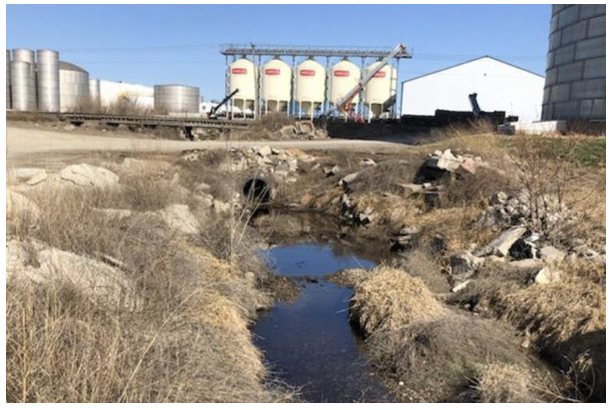
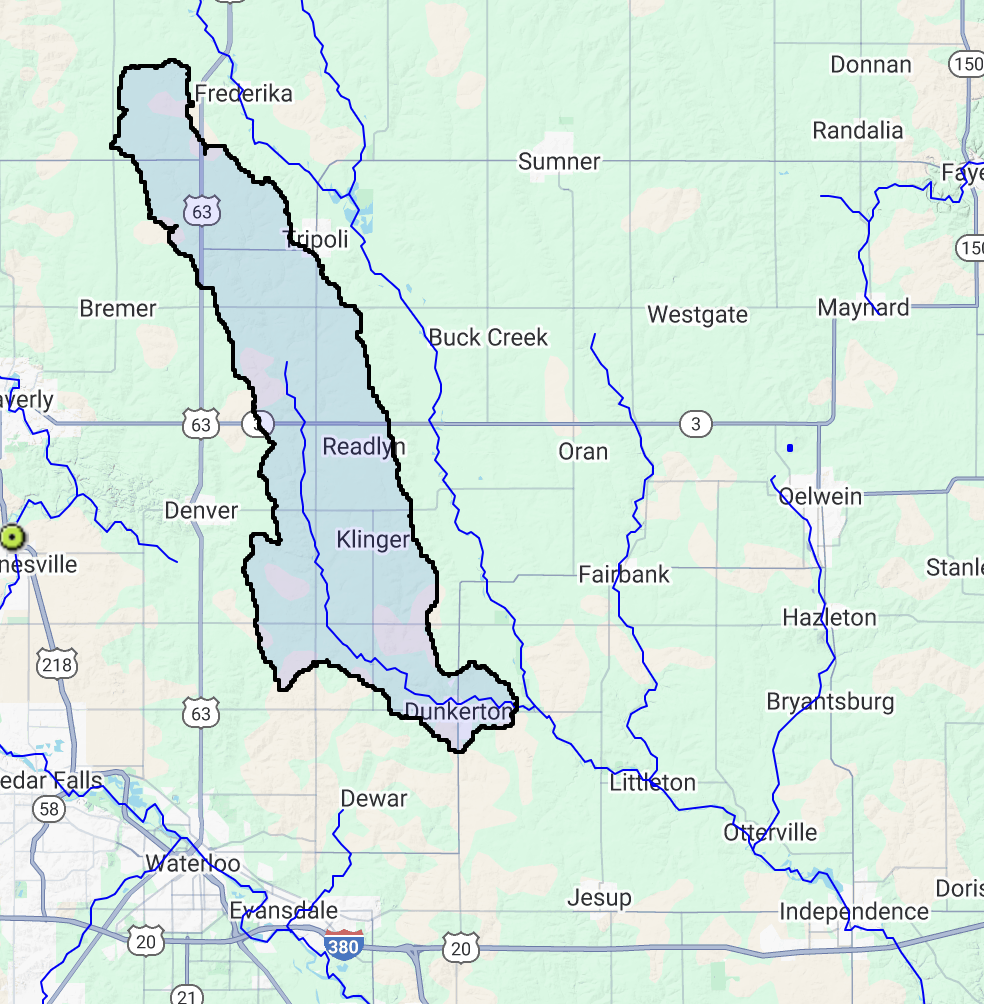
A few days after the Mud Creek Kill, an estimated 40,000 fish were killed in Crane Creek at nearly the same location (near Readlyn in NE Iowa) as a 2023 fish kill. For some reason, the 2024 event is not appearing in the DNR fishkill database, although the timing of the event coincides with crop dusting of fungicides in Iowa. These chemicals are known to be toxic to fish (1).
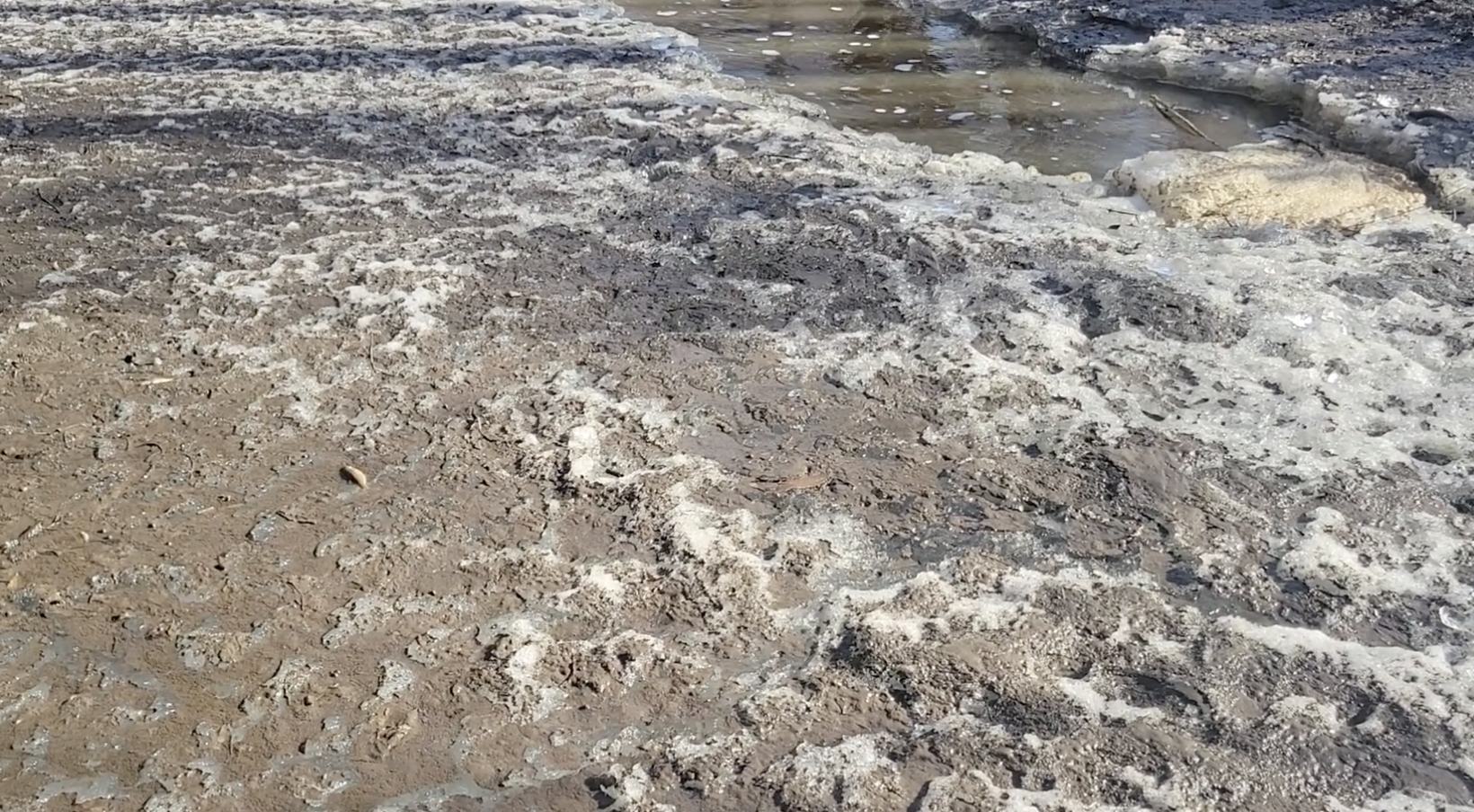
Dairy cattle manure also caused a massive fish kill on Dry Run Creek in Winneshiek County in NE Iowa on March 10 of this year. An estimated 126,000 fish died (also a category 8 kill) when a manure control structure that had been identified as faulty in previous DNR inspections was breached during a rain event. Liquid manure and dead and dying fish were observed atop stream ice. The dairy operator, a member of the Iowa State Dairy Association Board, was also cited in 2017 for killing 35,000 fish in the same stream.
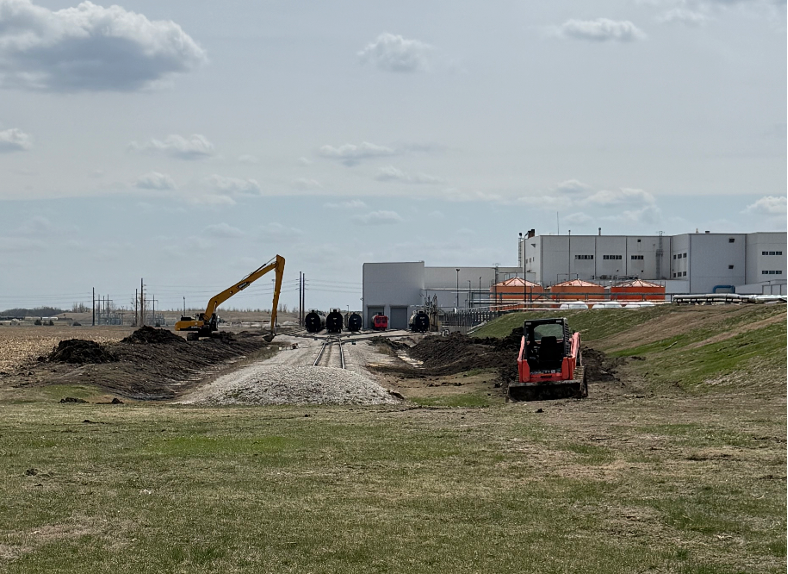
Then a week ago, in an event eerily similar to the New Cooperative Nishnabotna fish kill, Korea-based Agribusiness giant CJ Bio discharged an unspecified amount of fertilizer byproduct (could be about anything but likely some organic substance resulting from rendering or extraction of products from grain or slaughterhouse waste) into Lizard Creek north of Fort Dodge. This caused a category 7 fish kill (up to 100,000 fish killed) in this tributary of the Des Moines River. The Des Moines River helps supply municipal drinking water to the downstream cities of Boone, Des Moines, and Ottumwa.
In the past 13 months Iowa has had 4 of its worst fish kills ever dating to 1981.
Be assured that it is within our capacity to prevent events like this from happening. But our state’s leaders think attracting polluters like this to our state is good for bidness, and so we don’t make them adequately armor their operations against environmental catastrophe. And the penalties for such an event when it does happen are deliberately kept light and as such deterrence is non-existent.
Intrinsic to human agriculture is a disturbance of the environment. Evidence of this disturbance has been found for even the ancient agriculture of the indigenous people of North America (2). Only over the past two centuries, however, has agriculture, and especially western agriculture, resorted to violently subjugating nature by steamrolling through its biological, chemical, and physical processes. We might consider John Deere’s invention of the steel plow in the 1830s as the beginning of this era.
In the post World War II period, the victims of the violence, at least in countries like the U.S. and Canada, have included not only nature but also the very people industrialized agriculture purports to feed. Fossil fuels have been the accomplice in their crime, greed the motive. The crime spree accelerated in the 1970s as the industry began decoupling livestock from the farmers growing their food. This was most efficiently and profitably done (at least for those in agribusiness) by eliminating forage crops in favor of more corn and especially soybeans. Concentrating livestock animals on only a subset of farms often changed the nature of manure from mostly solid to mostly liquid and made it “hot”, i.e. increasing its capacity to do environmental damage. A CAFO puts millions of pounds and gallons of environmentally hazardous material into the hands of one person to manage. Can it be a surprise that one farmer now has the capacity to kill a good-sized river?
It doesn’t have to be this way. We have the capacity to farm, produce food prosperously, and process farmers’ inputs and outputs without inflicting violence upon both nature and people. We literally know how to do it; some in agriculture are doing it. The rest consciously choose not to. Why? Because the ethic driving Iowa agriculture is one of exploitation. Farm it all. Squeeze out every last bushel. Environmental degradation and other collateral damage like cancer, asthma, birth defects—that’s for sissies. They tell us it’s a small price we all have to pay for the prosperity they bestow upon us.
I see the descent into violence much like a ball bearing that spiraled down a funnel; each revolution (mechanization, consolidation, drainage, pesticides, chemical fertilizers, GMO, CAFOs etc.) was drawn ever downward by some tiny gravitational logic until the ball finally reached the bottom of the funnel and people in places like Iowa found themselves in awash in filth and engulfed in stench while wondering if our water is safe for drinking and swimming and if our air is safe for breathing.
I’m certain that the people that have profited most from the spiraling ball have seen the polluted water, dead fish, and human health consequences. But their greed is such that rather than change the polluting paradigm, they find it more convenient to look the other way. Or they find it more cost effective to pay for sickening propaganda like this:
The violence, in plain sight for years now, endures because it has been sanctioned by our society’s elite. The near entirety of Republican Party office holders and apparatchiks see the violence as necessary to maintain the status quo, and hardly even see it as a bad thing. Kicking environmentalist ass feels good to them. They enjoy it, brag about it, and congratulate each other for doing it.
The Democrats want us to take comfort in the idea that at least in aggregate, they aren’t sadists on this issue like the Rs. But their fetish for farmer votes and lust for agribusiness cash have compelled them to turn a blind eye to far too much of the violence. They’ve looked the other way, not only allowing the carnage to continue, but, in doing so, effectively endorsing it.
Elites in academia have eagerly sold the ivory tower to the perpetrators of the violence, all the while knowing better than anybody the consequences of it. Some are eager to signal loyalty by providing the intellectual foundation for it. This leaves it to the foot soldiers at the universities, agencies and NGOs to speak up; few (or none) see an upside to doing that.
Reading is my inspiration and often I pick up a book, any book, hoping to find something relevant to my frequent topics. This creates some odd couplings: Bob Dylan and Joni Ernst, Abe Lincoln and walleye fishing, Richard Feynman and manure digesters, and Galileo and Chuck Grassley, to name a few.
For a long time I’ve wanted to apply this formula to the work of Primo Levi. Never was a writer named more fortuitously than Primo. An Italian of Jewish descent who famously survived a year in Auschwitz, this chemist was one of the 20th century’s greatest writers. My take on the guy is he had two styles and two perspectives, usually separate and distinct depending on the book: 1) scientist and 2) witness to unspeakable horror.
Reading the ‘witness’ work is like wandering a dense, dark forest at midnight. The thought of what lurks behind the next tree is terrifying, but marginally less terrifying than what might be creeping up behind you. The reader is compelled to wander on.
(Be certain as you continue here that I am not drawing a moral equivalence between the Holocaust and the condition of Iowa’s environment.)
In his last book before dying, The Drowned and the Saved (1986), Levi seems to merge his two perspectives, analyzing the horror in a careful and meticulous way characteristic of his scientific training. He evaluates the behavior of German citizens, Auschwitz guards and the Jewish prisoners that collaborated with the camp guards and administrators. He notes that ordinary Germans found comfort by looking away, convincing themselves the worst wasn’t happening as long as they didn’t look at it. Levi also observes that after the war, all who were responsible for orchestrating and implementing the Final Solution, from the erudite Albert Speer, to the fanatical Adolf Eichmann, on down to the lowest brute guarding the camp kitchen, said they did what they did because they were ordered to do it, my superiors committed worse acts than mine, and in the environment in which I existed, I could not have acted differently.
Particularly interesting was Levi’s analysis of the philosopher Friederich Nietzsche. It’s well known that many in the Third Reich, including Hitler, admired Nietzsche. Not surprisingly, Levi found his message repugnant. But he did not find in Nietzsche an evil joy derived from the infliction of suffering, unlike so many responsible for the Holocaust. On that, he characterizes Nietzsche’s perspective as such: “The pain of the hoi polloi (the people) is the price that must be paid for the advent of the reign of the elect; it is a minor evil, but an evil nonetheless.”
It cannot be disputed that we’ve bestowed privilege upon Iowa agriculture—in our culture, in our economy, in our politics and in the control and oversight of our natural resources. They act like ‘the elect’ for a reason—because they are. I urge you to challenge and confront that privilege head on. It’s past time that we stop submitting to the abuse. The reason for our degraded environmental condition is because there has been a conscious, deliberate, organized, and yes, sinister effort to deny Iowans a better quality of life, better air and better water, better and more parks, and the right to enjoy nature.
Don’t let them look away.Citations
1. Jochen P. Zubrod, Mirco Bundschuh, Gertie Arts, Carsten A. Brühl, Gwenaël Imfeld, Anja Knäbel, Sylvain Payraudeau, Jes J. Rasmussen, Jason Rohr, Andreas Scharmüller, Kelly Smalling, Sebastian Stehle, Ralf Schulz, and Ralf B. Schäfer Environmental Science & Technology201953 (7), 3347-3365
2. Pompeani DP, Hillman AL, Finkenbinder MS, et al. The environmental impact of a pre-Columbian city based on geochemical insights from lake sediment cores recovered near Cahokia. Quaternary Research. 2019;91(2):714-728. doi:10.1017/qua.2018.141
Four companies control nearly 80% of the meat industry in the U.S. It’s time to bring back local processors like Stacyville Poultry Processor, support small towns, and create high-quality jobs where they’re needed most.