An ecosystem is a collection of organisms that interact with one another and the physical environment to form a functioning unit; nutrient and energy flows bond the codependent species and individuals within species. Some ecosystems include a diverse assemblage of many different species (rain forest); others are not so diverse (tundra). Of course, ecosystems commonly overlap and prior to colonization Iowa was a place with a lot of overlap: wetland/prairie/savannah with the various sub-categories of prairie (wet/mesic/dry) in the middle.
Ecosystems naturally are in a constant state of flux as a result of external forces like weather. Drought, for example, can cause some species to thrive and others to suffer until the atmosphere right-clicks and things change. Ecosystems resistant to perturbation from external forces are termed ‘resilient’.
We’ve come to use the term ecosystem to describe different components of American culture and economy, with the ‘media’ ecosystem perhaps the best and mostly frequently discussed example. Resilience in these cultural and economic ecosystems also tends to be in proportion to their diversity. As consolidation in media drove mergers in the tv and newspaper business, the system became less diverse and less resilient as consumers migrated to social media platforms, resulting in the extinction of many newspapers, especially. Now we pick the news we want to read and hear, and in the process we’ve provided opportunity for lunatics to be taken seriously (and to get rich).
I’ve thought about the ecosystem of Establishment Agriculture (EA from here on out) quite a lot, and what I could authoritatively say about it. I tend to think only poets have license to write unauthoritatively. Write what you know, as the saying goes.
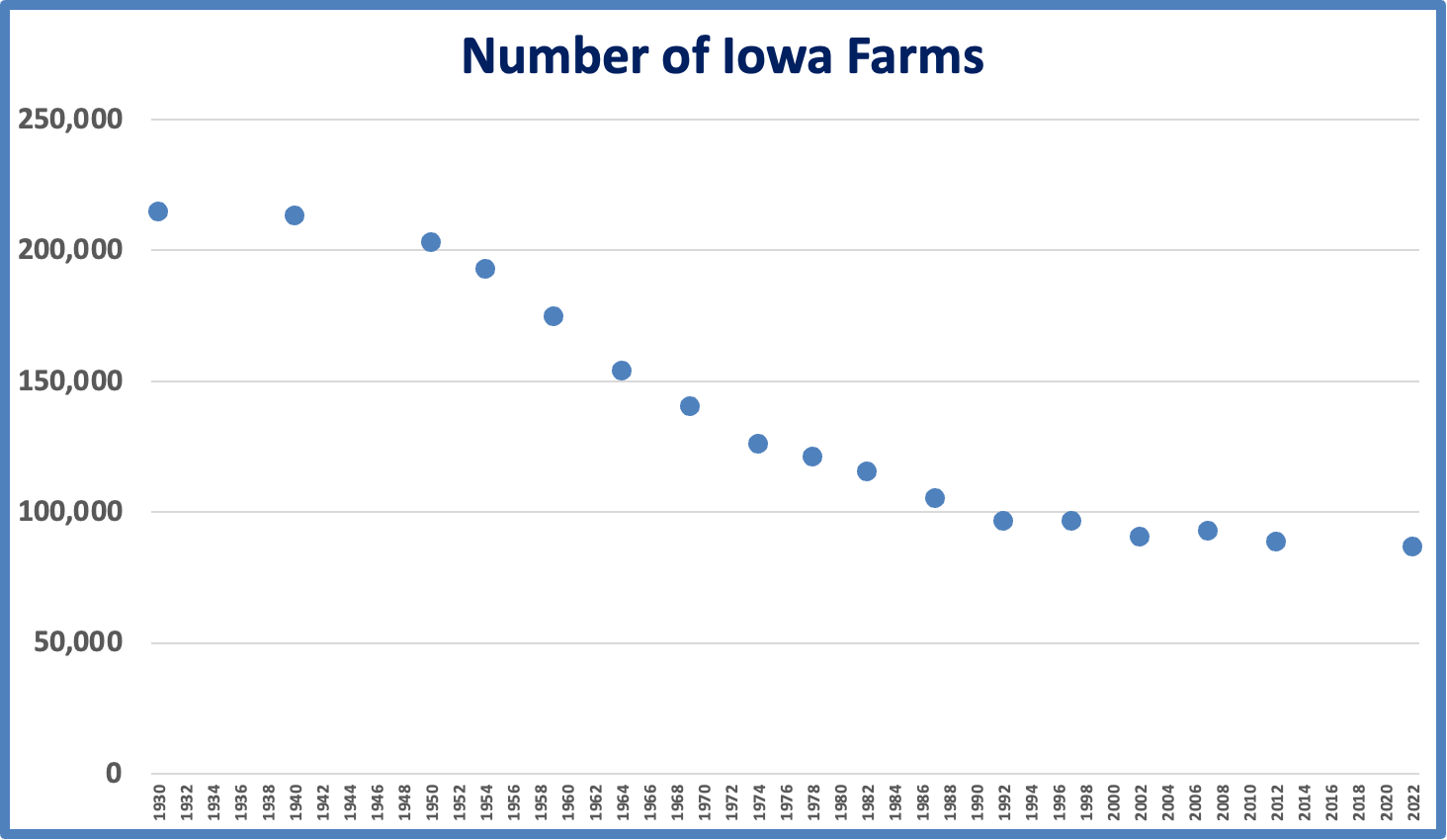
There’s been a huge amount of consolidation in farming and EA in general over the past century. In 1930, Iowa had 215,000 farms/farmers; today there are 87,000, give or take (1). Curiously, almost all that consolidation happened between 1950 and 1997, when the number of farms declined more than 1% per year (203,000 to 97,000). Since 1997, the number of Iowa farms has declined only 0.3% per year (97,000 to 87,000).
Fun fact: Genetically Engineered (GE/GMO) seeds were commercially introduced in the United States for major field crops in 1996.
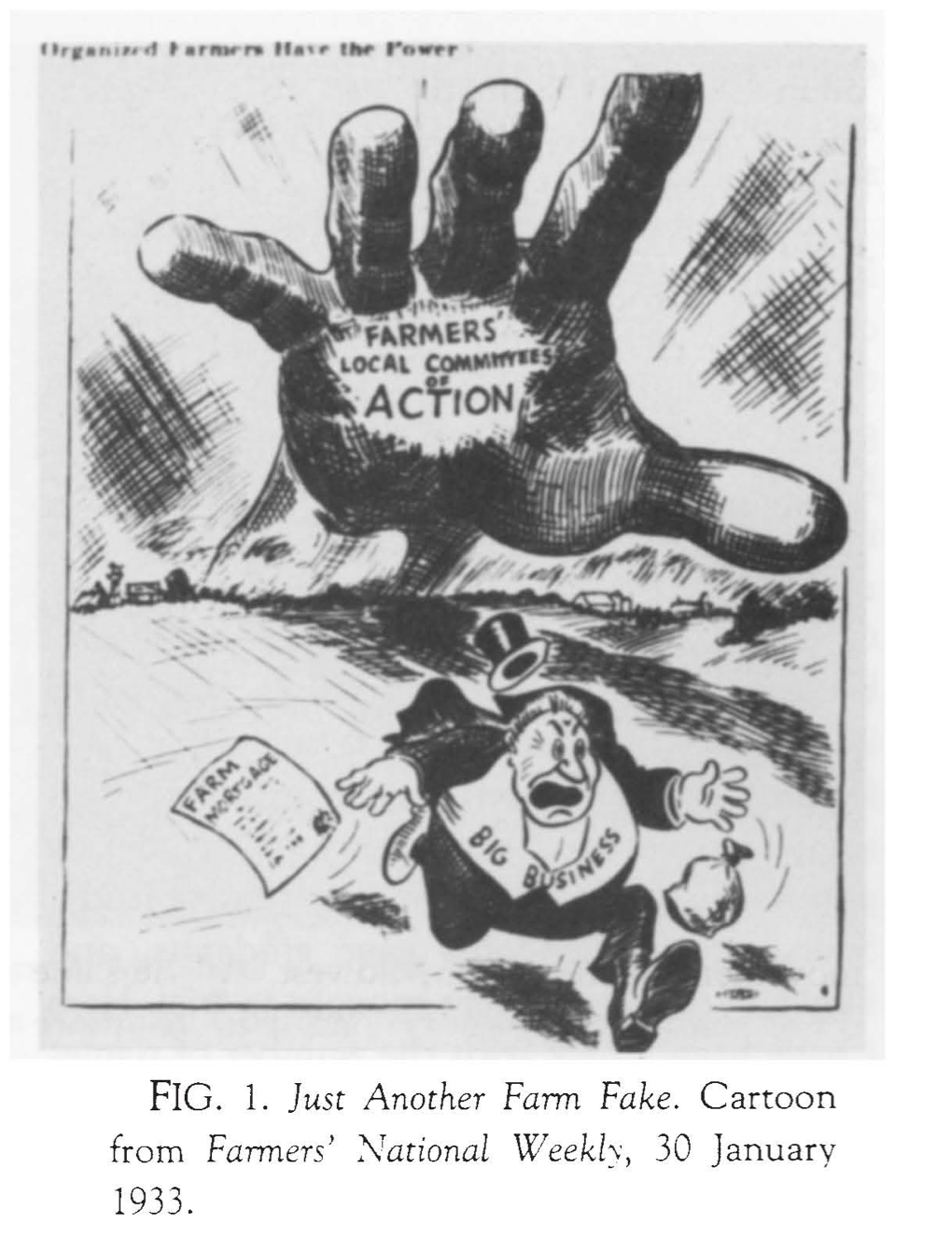
There should be and has been throughout history a fundamental conflict between farmers and agribusiness. The best example of that intrinsic conflict is with grain prices—farmers want them high, buyers want them low.
That conflict turned tense and sometimes violent during Depression-era Midwest farm revolts (2). Many farmers then were ‘actual’ socialists, and not the closet variety of today. The farmer protests, boycotts, milk wars and other defiant expressions of rebellion against the Ag oligarchy in the 1930s are unthinkable today.

Commercialization of seeds (especially seed corn) happened long before the introduction of GMO—Iowans Henry Wallace and Roswell Garst were hybrid corn seed pioneers in the 1930s, as the name of Wallace’s company proudly announced. Wallace and Garst had close ties to farming and their hybrid seeds put corn yields on an ‘up’ escalator, the operation of which was ultimately handed over to lab nerds shuffling genes from one species to another.
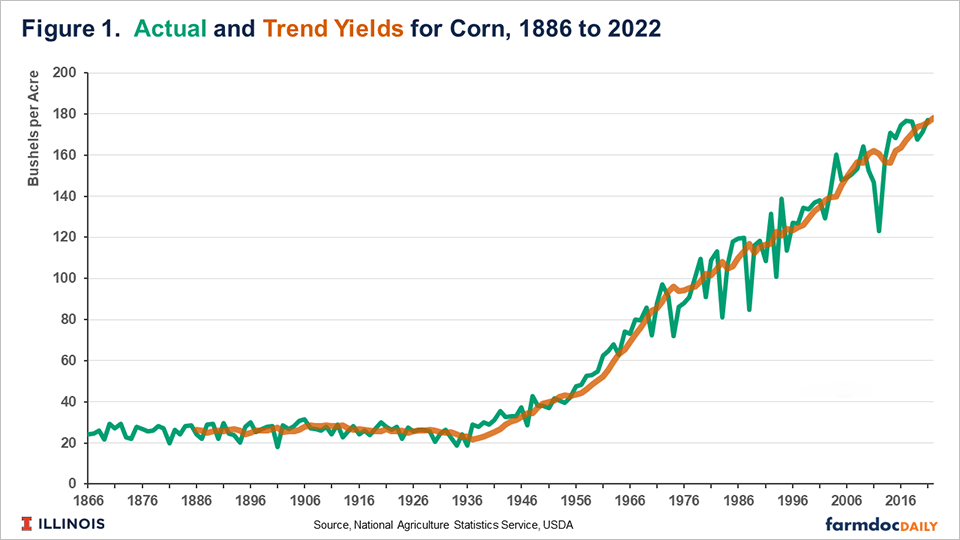
Genetic engineering did not bump corn yields onto a different trajectory; in fact there’s some evidence that yields have topped out in recent years (weather may be a strong driver here too). And you hear some talk that yield of conventional hybrids and even open pollinated varieties can exceed that of GMO corn in good weather years. GMO did, however, armor the crop against external and unpredictable perturbations like drought, insects, and weeds. As a result, the number of Iowa farms has stabilized I believe because GMO reduced the likelihood of calamity. I’m not saying this is the only factor, but I think it is perhaps the most important. Feel free to disagree. My replies and DMs are open to all.
There can be no doubt that farm income still goes up and down from year to year, but by and large crop farming in Iowa is extremely solid overall when compared to almost any other business venture you want to name. That’s why the land is so expensive.
Back to the AE ecosystem. Even though this ecosystem has a small number of species and lacks overall diversity, it has been made resilient through government policy. The taxpayer has indemnified the system through a variety of subsidy programs and boondoggles like fuel ethanol.
There was a cleverly written letter in the Des Moines Register this morning (5/4/25) where the writer (David Russell of Ames) parodies the multi-generational farmer pride frequently on display in Ag propaganda, i.e. a farmer basking with satisfaction that he/she is farming the same 40 acres their great-great-great-great grandfather snatched from indigenous people in 18XX. Of course, anyone farming today is also farming a lot of snatched land that was acquired through bankruptcy proceedings over the last 150 years. Russell maintained that he was a proud third-generation farm subsidizer and as such has a right to clean water and other such niceties. David, David, David. Rookie mistake, dude.
As GMO crops helped farmers and agribusiness get on the same page, they’ve also bonded them with a blood oath as partners in what is essentially a money laundering operation. Uncle Sam writes the name of Harold Farmer on a check, and then Harold delivers a sizable portion of the subsidy money to Bayer, Koch, Cargill, Corteva, Nutrien, John Deere and all the retailers selling their products. Recipients also include the crop insurance companies like Farm Bureau. Subsidies indemnify the farmer, yes, but also keep them obedient, keep them buying product and keep them producing a surplus of commodity grain, which maintains a low price for buyers in the value chain. This is a conscious choice our government has made and in the overall scheme, the amount of your tax money spent on this scheme is small so we can keep the peace and prevent farmer rebellion like what was seen in the 1930s. It’s what both political parties want and it has worked as intended, but it needlessly destroys wildlife habitat and open spaces while keeping us awash in pollution and eating junk, stuff politicians don’t care about.
We frequently talk about diversifying farms with other crops like oats that will improve environmental and nutritional outcomes while reducing water pollution in places like Iowa. This literally can never happen at meaningful scales without policy changes and farmer incentives because the Big Ag oligarchs who control the politics on these issues would then get one less dip of their beak into your tax dollars.
Every ecosystem has symbiotic species, where long-term interactions between the two benefit each. Such is the case here with farmers and agribusiness. Every ecosystem also has its scavengers that eat the leftovers of a meal consumed by predators. Think hyenas, for example. There are a lot of these in Iowa’s AE and one of them is former Iowa Governor and former USDA secretary Tom Vilsack, now head of the World Food Prize Foundation in Des Moines.
Vilsack, who perhaps has done more to entrench the current polluting production system than any other public figure, likes giving speeches now about how he’s for diversifying farms (3). “You’re not going to find me bashing the big guys. (Thanks, Captain Obvious.) We need them. We need to feed the world. (Barf.) We need their production. But aren’t we smart enough in this country to figure out how we can have that and small, midsized farming operations? Can’t we figure out a way to make it happen so that you have an option?”
According to the article: “Vilsack proposed helping farmers create multiple revenue streams by establishing government incentives for sustainable and environmental farming practices and crop diversity, finding new uses for agricultural waste like Wisconsin dairy farms turning waste into methane (anaerobic digesters) that can be sold to natural gas producers, and establishing more direct farm-to-market options.” NOW you tell us Tom, after you were governor for 8 years and USDA secretary for 12 years. Thanks Bud.
Also Tom, here’s a newsflash: the only place anaerobic digesters can be made to work are mega livestock farms.
I must say that the World Food Prize Foundation (WFPF) is perhaps THE best place for Vilsack to have landed. It enables him to don the robe and mission of Iowan Norman Borlaug, a scientist who devoted his life to ending hunger, while also retaining his pass to the Big Ag Executive Washroom. Here are some of the funders of WFPF over the past three years:
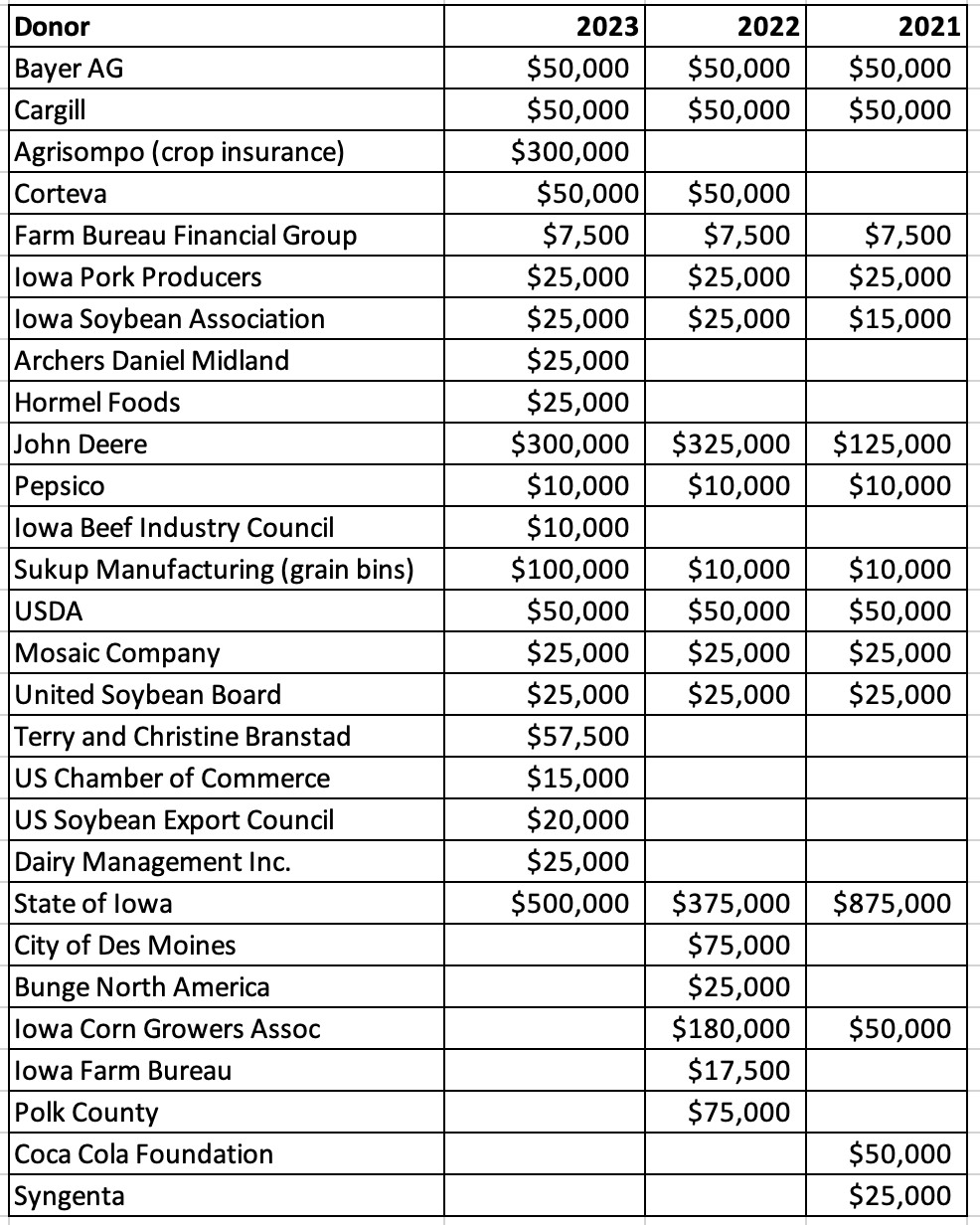
While it may have been created with the best of intentions, the WFPF is now clearly part of this Big Ag ecosystem, and just about anybody that’s somebody wants to be symbiotic with them. WFPF gets its sustenance from Big Ag cash, WFPF polishes the reputation of Agribusiness giants by helping them show that they really, really, really hate hunger. It’s a win-win and this story has been written over and over and over again as Agribusiness has learned to be a wily manipulator of the NGO world. WFPF is far from being the only NGO to inhabit the AE ecosystem.
And how do you feel about your tax dollars (i.e. USDA, state, county and city contributions to WFPF) going to what is now the eating equivalent of a green washing scheme?
I’ll finish up by saying the irony of Bayer funding the WFPF is, well, quite something. If you don’t know, Germany-based Bayer purchased the heavyweight champion of the GMO world, Monsanto, in 2018. Ever since, Bayer has been absorbing upper cuts to the solar plexus from lawsuits alleging negative health consequences generated by Monsanto’s Glyphosate (Roundup) herbicide, used in conjunction with GMO crops. Winded, Bayer is now pushing laws in state legislatures, including Iowa’s, that would immunize them against future lawsuits. The Iowa bill died in the 2025 session.
Yes, the judgments resulting from the lawsuits have been painful for Bayer. But my take on this is there is something larger at stake than a few billion in settlement money. And that something is GMO itself. Without Roundup and maybe one or two other chemicals, the Ag Establishment ecosystem loses all resilience and becomes ripe for perturbation. These pleas for immunization from lawsuits seem desperate to me and an acknowledgement of vulnerability.
Citations
-
Iowa State University. Iowa Community Indicators Program. https://www.icip.iastate.edu/tables/agriculture/farms-by-county.
-
Pratt, W. Rethinking the Farm Revolt of the 1930s. University of Nebraska-Lincoln, Great Plains Quarterly, Center for Great Plains Study, 1988
-
Murphy, E. Vilsack: USDA should help farmers diversify operations, revenue. Cedar Rapids Gazette, April 29, 2025.