Prosperity or safe drinking water.
Freedom or safe beaches.
Livestock or wildlife.
Love it or leave it.
Iowans shouldn’t have to choose.
The Platform
A Four-Point Foundation
1. A more diverse rural landscape.
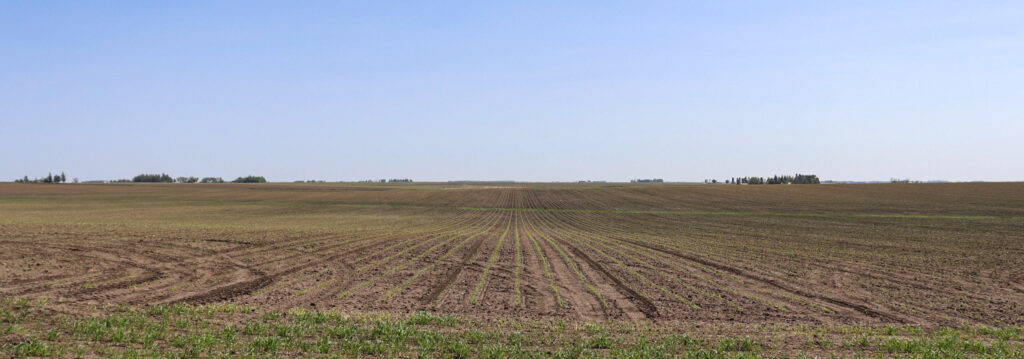
We CANNOT get the clean water and other environmental outcomes that we want when only two species (corn and soy) cover 70% of our land. Real progress requires real diversification: more kinds of crops, a more diversified and resilient rural economy, and a broader group of Iowans owning and stewarding the land. That’s how we restore rural Iowa.
2. Tax-payer funded off-ramps
For farmers wanting to recapitalize to farm more sustainably, and pollution regulation for those that don’t. This makes for more sense than band-aid and diaper conservation that has no hope of cleaning up our water statewide and only serves to entrench the corn-soy-CAFO system. Farmers who want sustainable and resilient operations deserve support. For those who wish to remain within the current production model, we must have enforceable, common-sense rules that protect our water, our health, and our downstream neighbors.
3. A strategic retreat from growing corn for fuel ethanol.
11,000 square miles of our land (1/5 th of the state) is used to grow corn for ethanol, with no real environmental benefit for Iowans. I believe the best ground on earth should be used for growing things of greater societal importance. Much of this land could be returned to pasture to help make Iowa a leader in sustainably raised beef.
4. A healthier and more livable Iowa.
Our health and well-being begin with clean water, healthy food, and communities where people can afford to live, work, recreate, and raise families. Step one is less pollution and more places where Iowans can enjoy nature. Strengthening local food systems that connect Iowa farms to Iowa tables will give the 98% of Iowans who don’t farm a stake in Iowa agriculture and build goodwill between the city and the countryside.
A 28-Point Solution
1. The pollution that results from the corn-soybean-CAFO-ethanol production system must be regulated.
That has never been more clear than now, when, yet again, 600,000 people in the Des Moines metro are held hostage by agribusiness and a few thousand upstream polluters. This is nothing less than a stain on our state and a public health crisis. We may not have the capacity to regulate the pollution today, but doing so is far from impossible. Assistance must be provided to farmers that want to get out of the high-input fast lane and embrace a more sustainable production system.
2. Return zoning authority and local control over livestock CAFOs to the counties.
The current Master Matrix scheme was a disaster from Day 1 and its consequences have only gotten worse over the past 20 years. Consolidation and concentration of animals on a small subset of farms have served to rend rural Iowa into pieces. The livestock industry has been allowed to get so huge, and is so tenaciously guarded by the establishment, that Iowa needs a reset if we’re going to protect our and our children’s health from this behemoth.
3. We need to regulate nutrient inputs (manure and commercial fertilizer) within the watershed framework.
A watershed is an area of land draining to a common point. There are 56 watersheds in Iowa with an average of 1,000 square miles. This will mean restrictions or taxation on fertilizer sales and animal populations. There is no other way to solve nutrient (and especially nitrate) pollution. The current voluntary scheme will not produce better water during the lifetime of anybody reading this.
4. Restore riparian areas along stream banks.
This means perennial cover (not row crops) in the flood plain. Streambank destabilization has been an ecological disaster in western and southern Iowa. We need 50’ setbacks for farming along streams, and as much as 10-20 times that in some areas to allow re-meandering on rivers, which is a natural way to improve water quality and reduce flooding.
5. Moratorium on additional agricultural drainage tile unless the outlet is mitigated for pollution at the landowner’s expense.
We cannot solve nitrogen pollution until we come to grips with why it enters the stream network, and that is drainage tile.
6. Development of a strategic plan that helps Iowa retreat from corn ethanol.
The Iowa Renewable Fuels Association said 20 years ago that ethanol was a ‘bridge’ fuel. Let’s start getting the cars off the bridge.
7. Development of policy incentivizing the production of alternative crops and livestock in pastoral systems.
Inconvenient truth: we will never get adequate water quality with only two species covering 70% of Iowa’s land.
8. Set a maximum contiguous parcel size that can be planted to only one crop.
While accommodating possible traffic hazards.
9. Ban mowing and chemical application to ditches.
This will promote diversity and slow consolidation in crop farming.
10. Ban fall tillage on corn-soy rotations.
We’ve known for 40 years that it is a terrible practice. Why do we allow it when it’s clearly not necessary for robust crop yields? One reason — it’s convenient for farmers wintering in Florida. No thanks.
11. Ban application of manure from Dec. 1 to March 15.
No exceptions, and onto snow at any date.
12. Require cover crops at landowner expense on all rented crop land.
We need policies that inspire non-operator landowners to sell. This could be one of several.
13. Sales tax on grain-based livestock feed.
To incentivize farmers to graze animals or feed with less-polluting forage crops.
14. Exempt farmland with a corn suitability rating (CSR) < 50 (100 is the highest) from local property taxes.
If corn and soy is not grown on the land. Tax land <50 CSR at elevated rates unless various conservation practices are in place. Or place an onerous tax burden on land <50 CSR if corn or soy is grown on it. We’ve got to quit growing the most polluting crops on marginal land!
15. Develop policy to create markets for alternative crops.
Such as oats, wheat, barley and livestock forages.
16. Zealous regulation of pesticide application.
Especially from airplanes, helicopters and drones. When the crop duster kills your oak trees or grape vines or the fish in a river — where are IDALS and DNR? Stories abound of inaction and bureaucratic foot dragging on this. Mark my word — airplane-applied fungicides polluting our water will be the next big thing. It might already be the next big thing.
17. Onerous penalties for those in agribusiness killing our streams.
River killers like New Cooperative, Three Rivers Cooperative, Agri Star and CJ Bio need to be shown the door if they can’t operate in Iowa without leaving death and destruction of streams in their wake. Why do we tolerate this? We cannot and should not badger farmers to clean up their act when we let these agribusiness giants kill entire rivers.
Food and Rural Development
18. A free fruit tree.
For any Iowan that wants one.
19. IDALS (Iowa Department of Agriculture and Land Stewardship) helps provide assistance.
To any town or city for creation of a community orchard.
20. Creation of land halos around cities for food production.
Others have promoted this idea before me. The city can manage or prescribe or incentivize food production as they see fit within certain guidelines — fruit and vegetable production, grazed livestock, etc.
21. Iowa school children should eat food grown and raised in Iowa — and from nowhere else.
All children that want it can eat breakfast and lunch for free at their school. Former Iowa representative Chuck Isenhart (Dubuque) has estimated that we could do this for less than half the cost of school vouchers.
22. Creation of a fleet of foodmobiles.
Grocery stores on wheels that make regular rounds to rural Iowa towns and urban food deserts that are a minimum distance from a grocery store. Rural people should not have to eat Kwik Star and Casey’s meals for breakfast, lunch and supper because the nearest grocery store is 25 miles away.
23. Help create markets and incentivize production for food crops.
Sweet corn, beans of all kinds, kernza, wheat, oats, fruit, nuts, root vegetables and many others that could be grown in Iowa. Importantly, less irrigation would be necessary to grow these crops in Iowa compared to arid areas where many are now grown.
24. Fast-track necessary farmworkers for citizenship.
Seventy of our counties have declining population and Iowa historically is one of the slowest growing states. Immigrant farm labor could help revitalize rural Iowa and field workers could be trained to work in all facets of food processing, storage, and distribution.
25. More Parks.
Why candidates for office don’t run on those two words alone bewilders me. Drive by any small town near a state park and what does the sign say at the city limits? “Gateway to 50,000 more forsaken corn acres?” NO! It says “Gateway to Backbone State Park,” or Lake Darling State Park. If I was a political consultant, I would put this on repeat and have the candidate listen to it while sleeping: We need more parks. We need more parks.
Other
26. The College of Agriculture at Iowa State needs to be pried from the clutches of Big Ag and returned to the public.
The incestuous relationship between corporate agribusiness and land grant research, the latter supported by tax dollars in myriad ways, is a malignant tumor for our state and has contributed to our polluted water in no small way.
27. Environmental enforcement at Iowa DNR in my view is unsalvageable and we need a reset.
There are those who will tell you this is a funding matter — if only we funded the agency at adequate levels, then they could do their jobs effectively. Funding is part of it for sure, but I can tell you that the problem is much, much deeper than that. The meat of agency culture is marbled with pro-polluter fat that cannot be sliced out. A democratic governor should peel off parks and wildlife into something resembling the old Iowa Conservation Commission, send Public Water Supply (drinking water) enforcement to the Iowa Department of Health, and then return primacy on environmental enforcement to EPA for a period of time while we reorganize environmental enforcement into an Iowa Pollution Control Agency similar to Minnesota’s.
28. Get candidates to support a constitutional Amendment for clean water and clean air!
Iowa law should recognize access to clean water and clean air as a fundamental right. The Iowa Constitution should be amended to assure that right is protected, and to guarantee that governmental actions conflicting with this right are subjected to strict judicial scrutiny. A further constitutionally imposed duty should be placed on state government: to affirmatively protect our precious natural resources for us, and for all future generations.
A Selection of Chris's Media Appearances
Chris often speaks about water safety issues with the Iowa media, especially following the publication of his collection of essays, The Swine Republic.